Hope is not a soft skill.
It is a neurological practice
and the single greatest predictor
of human performance under pressure.
Hope is not a soft skill.
It is a neurological practice
and the single greatest predictor
of human performance under pressure.














Psychologist. Author. Keynote speaker.
Strengthening human habits in the age of AI.
Every chapter led here.

One of six kids. I started performing early. Won a few local singing competitions too.
Mostly because I showed up with five built-in fans who had no choice but to cheer.
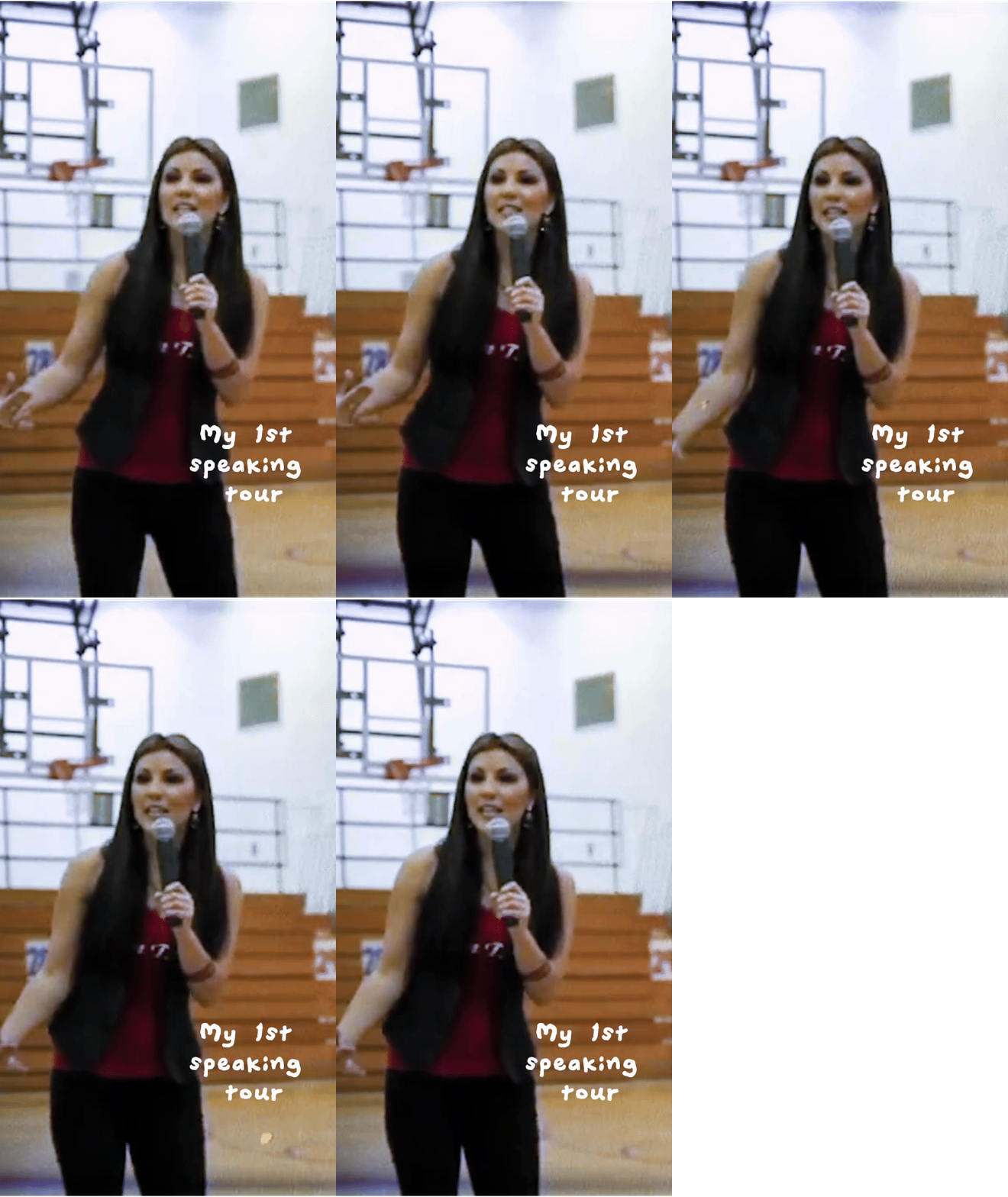
Then I started speaking and listening to stories I had never heard anyone say out loud.
What happens when the systems we build stop protecting the people holding them together? That question is why I started. It's why I'm still here. Hi, I'm Dr. J.
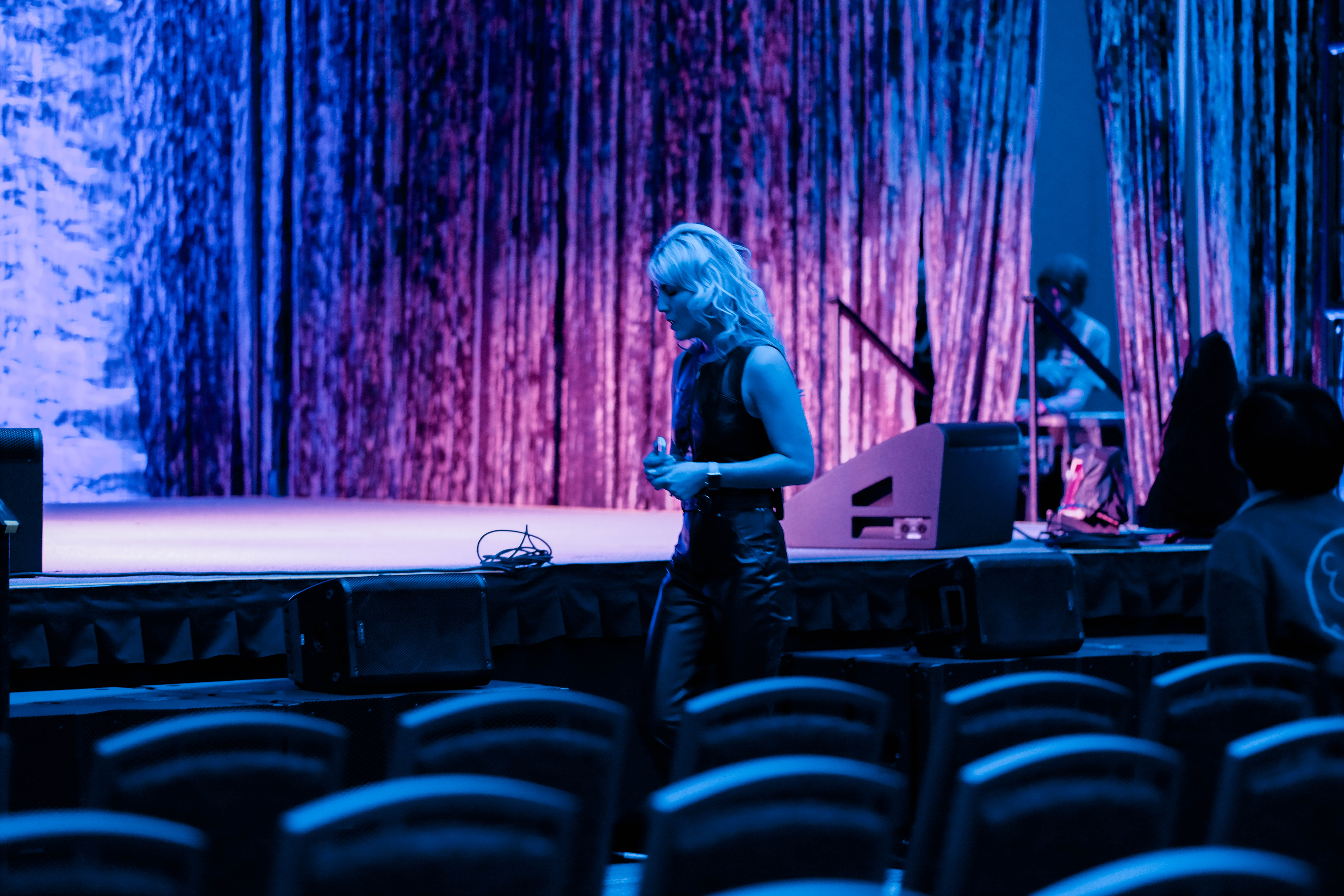
Psychologist. Keynote Speaker. Author of The Five Habits of Hope (HarperCollins)
As a psychologist, I study the intersection of technology, human behavior, and culture. I help leaders, educators, and teams strengthen the human habits that technology can't replicate. As a keynote speaker, I bring research and field experience into the room. Not as a lecture. As an experience.
From award-winning mental health technology to a global crisis-support platform reaching over 50 countries, I have dedicated my career to supporting communities at the intersections of cultural change. When I'm not on stage or in the research? I'm a mom, a spoken-word poet, and someone who genuinely believes that the most important work we can do right now is build human-centered leaders.
My methodology, Hope as a Practice, gives leaders and teams practical, research-backed tools to apply hope — not wait to feel it.
This is not a keynote about hope. It is a practice of it.
Dr. J delivers keynotes, workshops, and training programs at the intersection of human performance, mental health, and the AI era. She has held rooms in correctional facilities, hospital systems, Ivy League universities, and corporate leadership stages. The framework she brings into every room is the same one she built in the field, tested across 157 cities, 62 countries, and nearly two decades of working inside the hardest conversations.
When the brain loses hope it shuts down the systems responsible for motivation, goal-setting, and the ability to move forward. People don't quit loudly. They disappear quietly. And the organizations, families, and communities built around them feel it long before anyone names it.
That is what the Five Habits of Hope was built to interrupt.
The Five Habits of Hope is a behavioral system. Organizations leave with something they can use on Monday.
Keynotes. Workshops. Train the Trainer Programs. Leadership Intensives.
and are atrophying?
72%
of workers are more worried than hopeful about AI's impact in the workplace
Pew Research · 2025
20%
of employees globally experience loneliness every single day at work
Gallup · 2025
90%
of U.S. workers report at least one mental health challenge at work
Mind Share Partners · 2025
The Habits of Hope methodology is not inspiration.
It's infrastructure.
HarperCollins
A CEO of an organization found Dr. Julia Garcia's book, The Five Habits of Hope, on Spotify searching for hope. They read Chapter Three three times. Then they called my agency to learn more about my work.
The Five Habits of Hope is not self-help. It is the neurological and psychological case for why hope is a practice and the field-tested framework for building it into your life, your team, and your organization.
Built across thousands of stories of field research before it became a book.
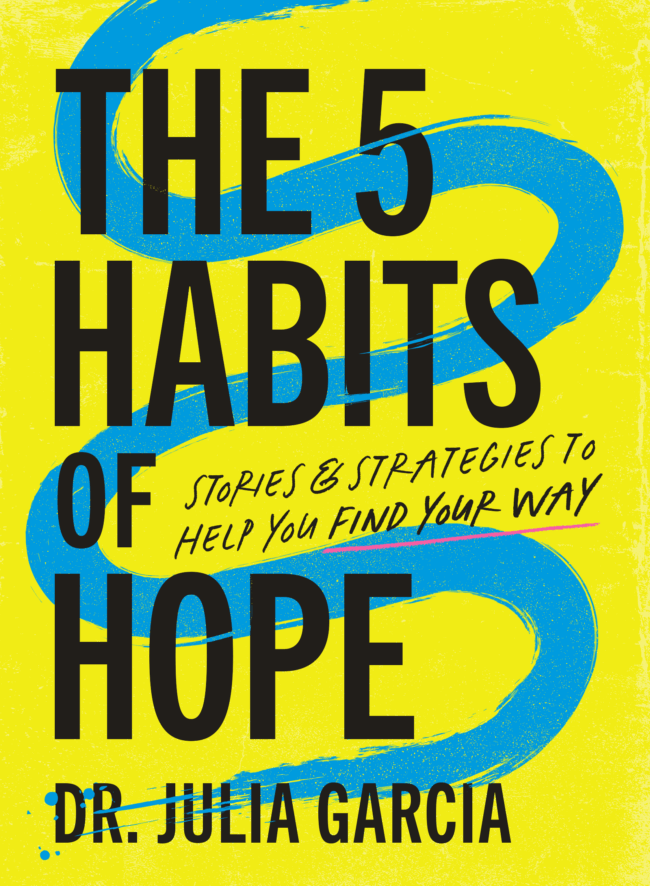
Habits of hope in an era of artificial everything. Artificial connection. Artificial confidence. Artificial leadership.
Today at work our curriculum team asked me to join them and give them some input. They were creating a list of 10 people that our students in detention should be studying, with a focus on strong character and overcoming obstacles. They chose Jackie Robinson and a variety of other famous people. The third name on the list was Julia Garcia. Need I say more?
I've been planning this event for almost 10 years and this is one of the best experiences I have ever had with a speaker and their agent. She connected well with all audiences regardless of age or other demographics. I'm so glad we brought her when we did because our communities are experiencing so much right now and she made them feel seen and validated.
She is the real deal! Dr. Julia Garcia delivered a powerful keynote that inspired the audience and left them eager for more. Additionally, she was genuine and personable with everyone she interacted with.
What we appreciated most about Dr. Julia Garcia was not only her professionalism but the genuine care and intention she brought into the room. From the moment she began, there was a warmth and presence about her that immediately set the tone for something meaningful. You could feel that this wasn't just a presentation. It was an experience.
Today at work our curriculum team asked me to join them and give them some input. They were creating a list of 10 people that our students in detention should be studying, with a focus on strong character and overcoming obstacles. They chose Jackie Robinson and a variety of other famous people. The third name on the list was Julia Garcia. Need I say more?
What we appreciated most about Dr. Julia Garcia was not only her professionalism but the genuine care and intention she brought into the room. From the moment she began, there was a warmth and presence about her that immediately set the tone for something meaningful. You could feel that this wasn't just a presentation. It was an experience.
I've been planning this event for almost 10 years and this is one of the best experiences I have ever had with a speaker and their agent. She connected well with all audiences regardless of age or other demographics. I'm so glad we brought her when we did because our communities are experiencing so much right now and she made them feel seen and validated.
She is the real deal! Dr. Julia Garcia delivered a powerful keynote that inspired the audience and left them eager for more. Additionally, she was genuine and personable with everyone she interacted with.
Leaders are carrying more pressure with less capacity to regulate everything. Hope increases a leader's ability to regulate their emotions and collaborate with confidence.
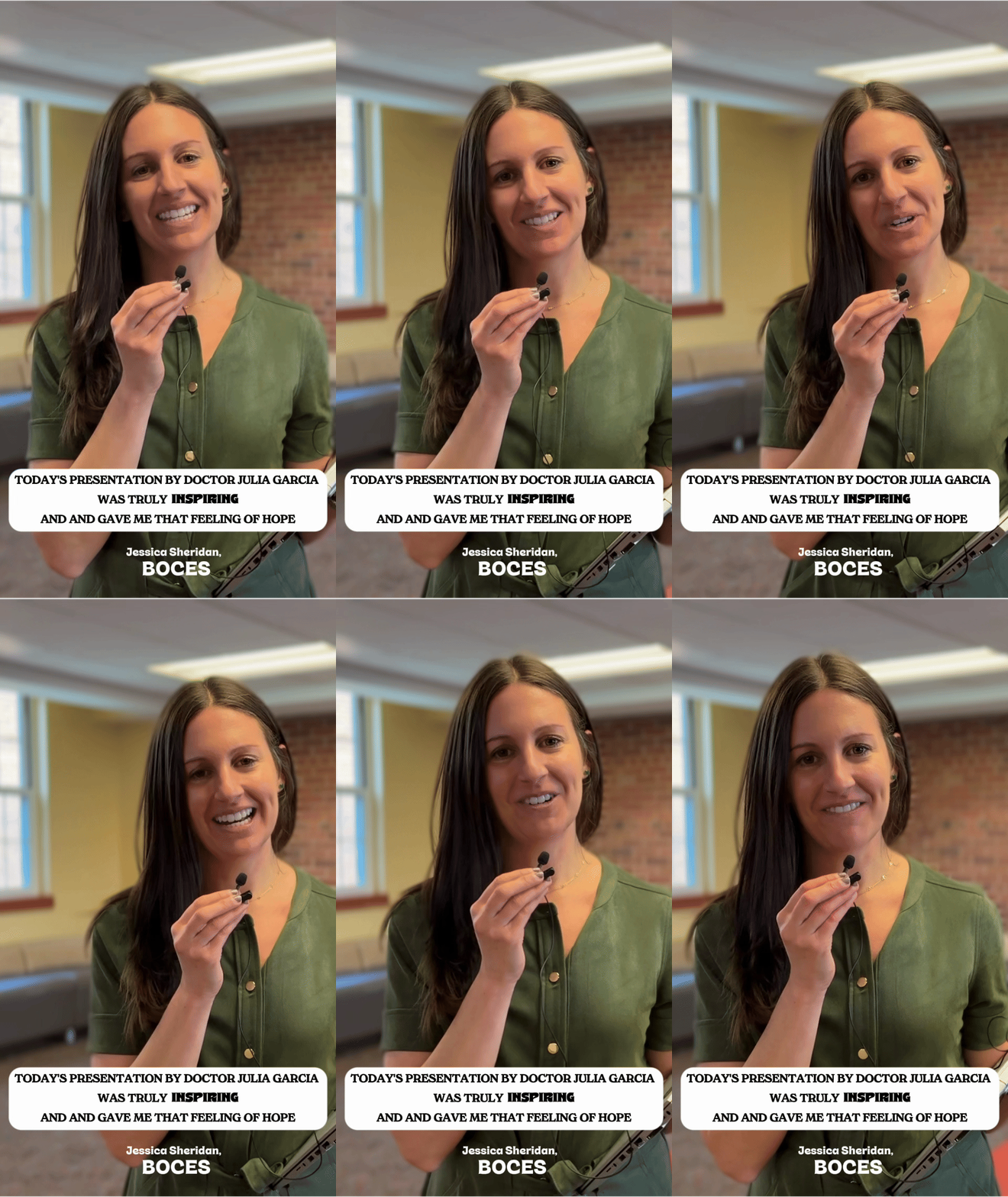
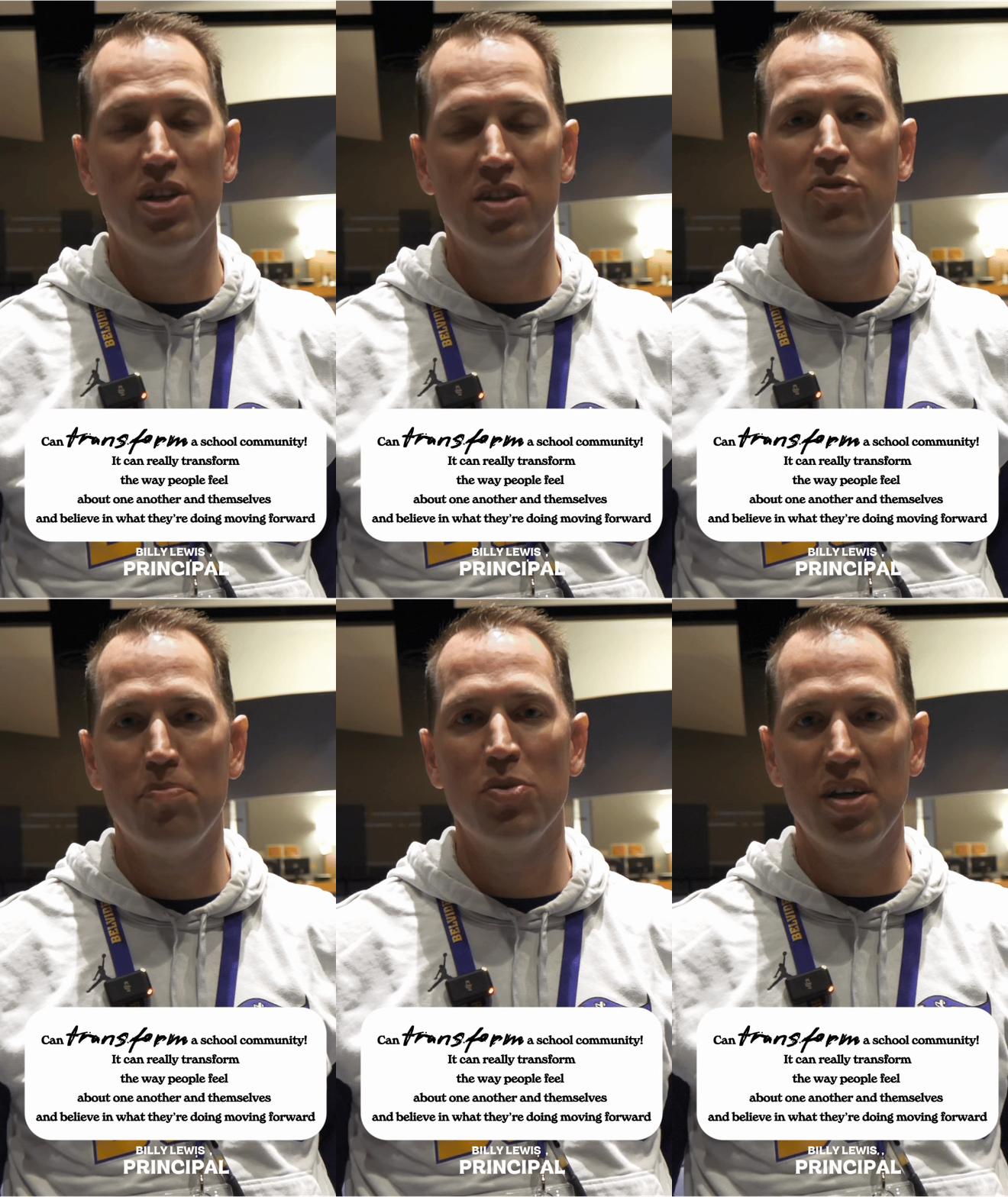
I've sat across teams who struggle to communicate, and the problem is only growing. 82% of employees already say they will need more human connection as AI takes over more of the work. The technology isn't the problem. The distance it creates is.
We've lived through the digital era, and an entire generation feels more lonely and disconnected than at any point in modern history. AI isn't introducing that struggle. It's accelerating it. We need more than a feeling of hope, we need the practice of it.
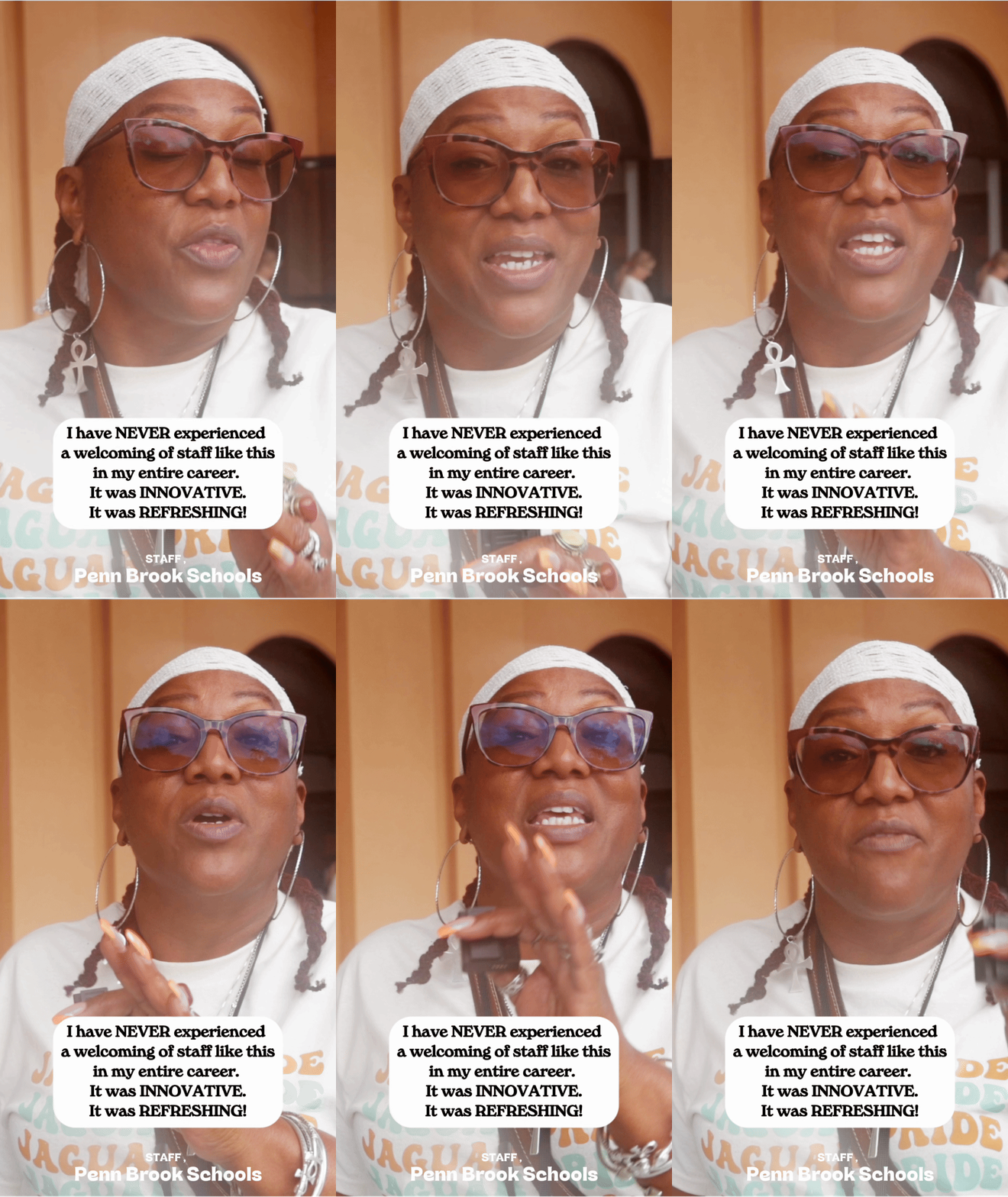
When the brain loses hope, it shuts down the very systems that help people move forward: motivation, goal-setting, planning, even our immune response. We stop problem-solving, stop adapting, stop participating. And we don't quit loudly. We just stop showing up fully.
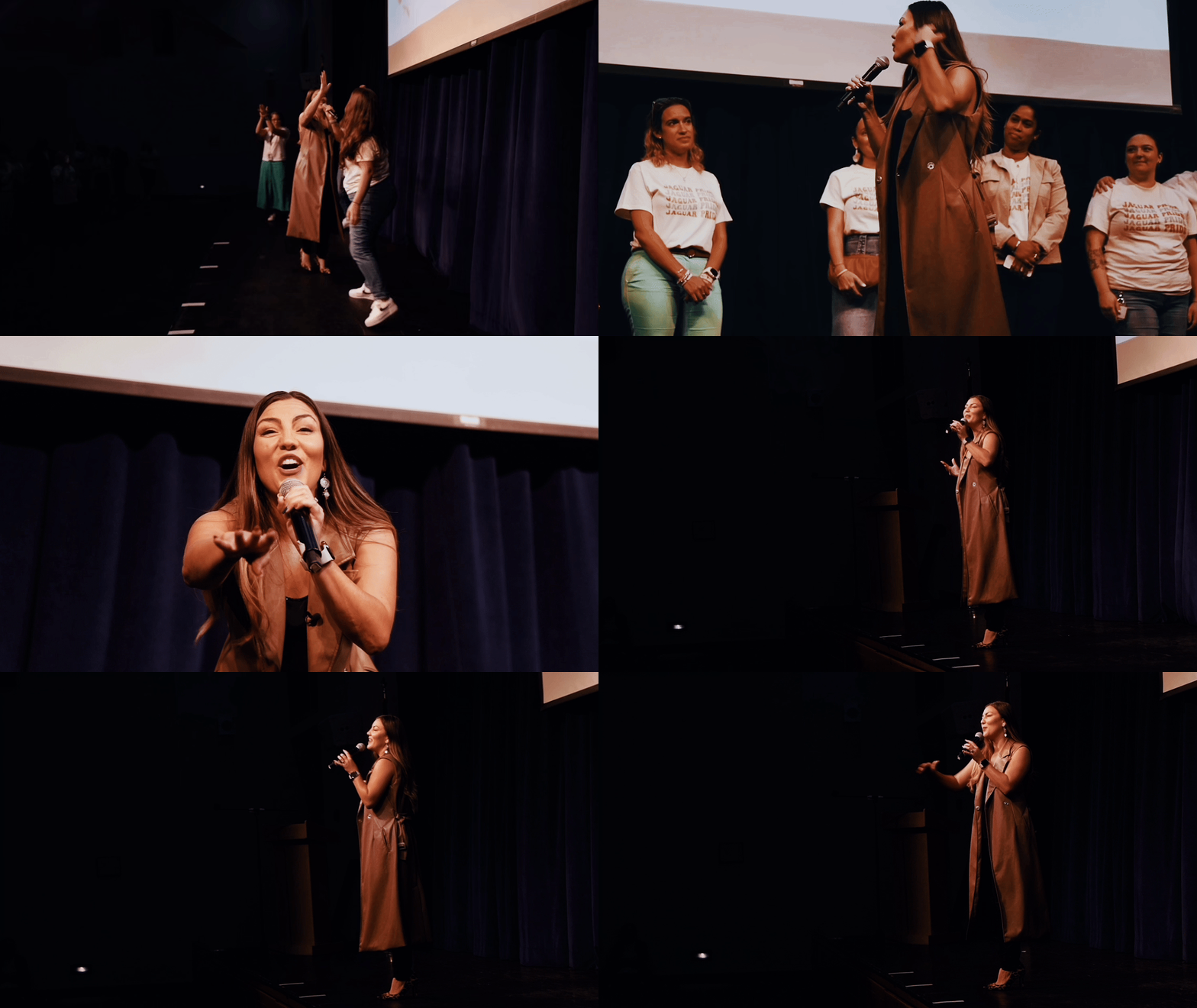
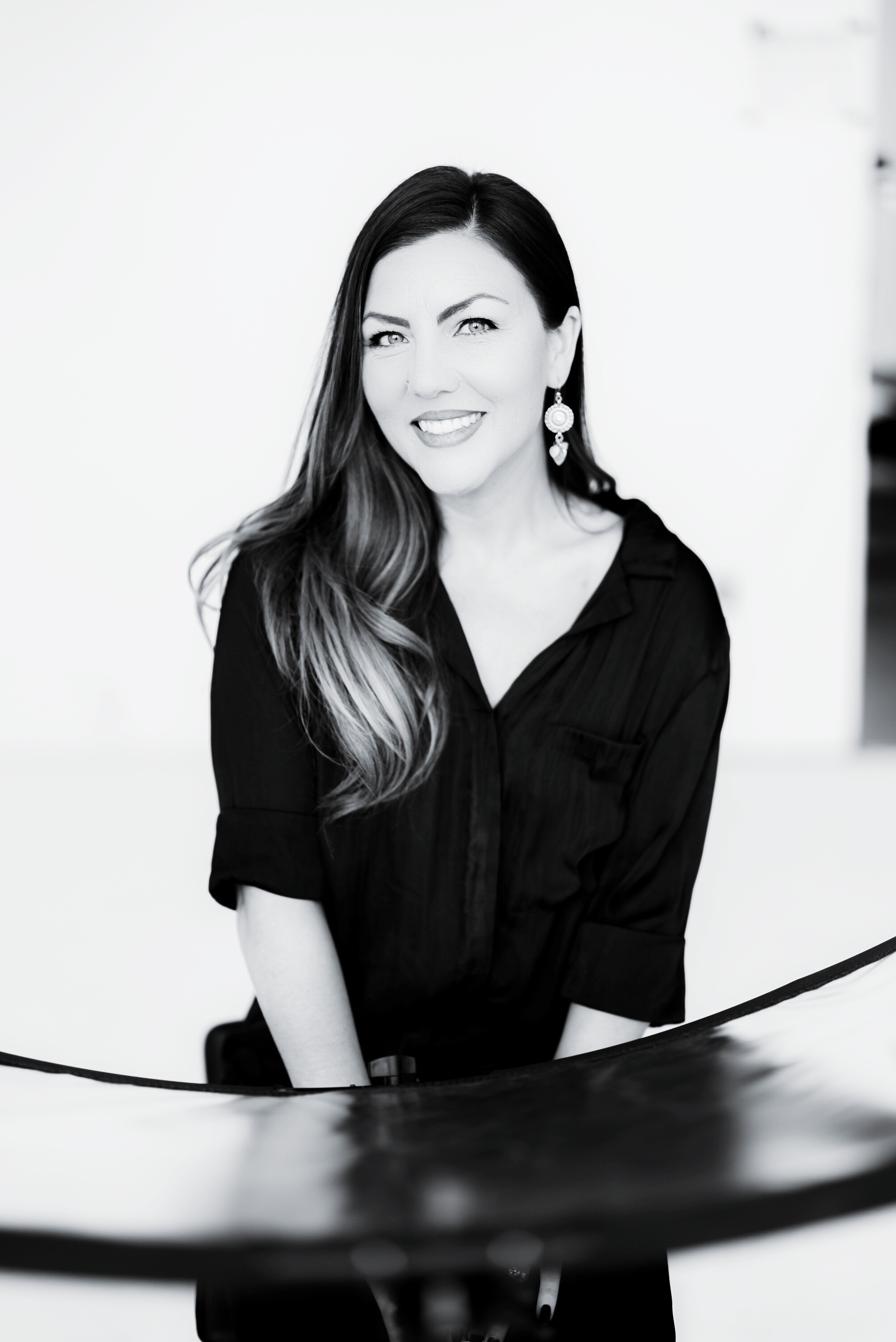
A doctor of psychology, cultural technologist, and TEDx speaker, she has supported over a million people through crisis, culture change, and community transformation, bringing two decades of psychological insight and innovative impact to her work.
Dr. Garcia's keynotes are immersive, trauma-informed, and grounded in experiential learning. She blends science, story, and live interaction to help audiences recognize the habits that hold them back and practice the ones that move them forward.
Her sessions support educators, leaders, and teams with practical tools and a renewed sense of purpose. Her book, The Five Habits of Hope (HarperCollins, 2025), reframes hope as a learnable practice.
She has delivered that framework to over a million people across corporate conferences, major universities, and venues no one expected — including the first-ever TEDx talk inside a women's correctional facility.
In an age of AI and distraction, where emotional regulation and connection are eroding, I deliver research-backed tools that help leaders and teams stay human, connected, and purposeful, so they build cultures that endure and evolve, especially through change.
When Dr. Julia opened our organization's largest event of the year, she proved to be much more than a speaker. Dr. Julia's talent, dedication, presence and delivery undoubtedly elevated the experience for all of us.
Given the time and place of women in our society – there is no better time to place big bets on women like Julia who can help empower and give voice to a generation of young women.
Get the latest on events, episodes, and stories.